
On Wednesday, I wrote about how our generation—Gen X—was the first to really get the language of feelings. We got the “EQ” download in 1995, and we’ve been the curse-breakers ever since.
But knowing the vocabulary is one thing. Living the verb is something else entirely.
The Self-Care Spiral A few months ago, my wife hit a wall. I was trying to encourage her to schedule her self-care—literally put it on the calendar on her phone or the dry-erase board in the kitchen. Our budget was tight (truth be told, it still is), and the question didn’t bring her peace. It brought panic.
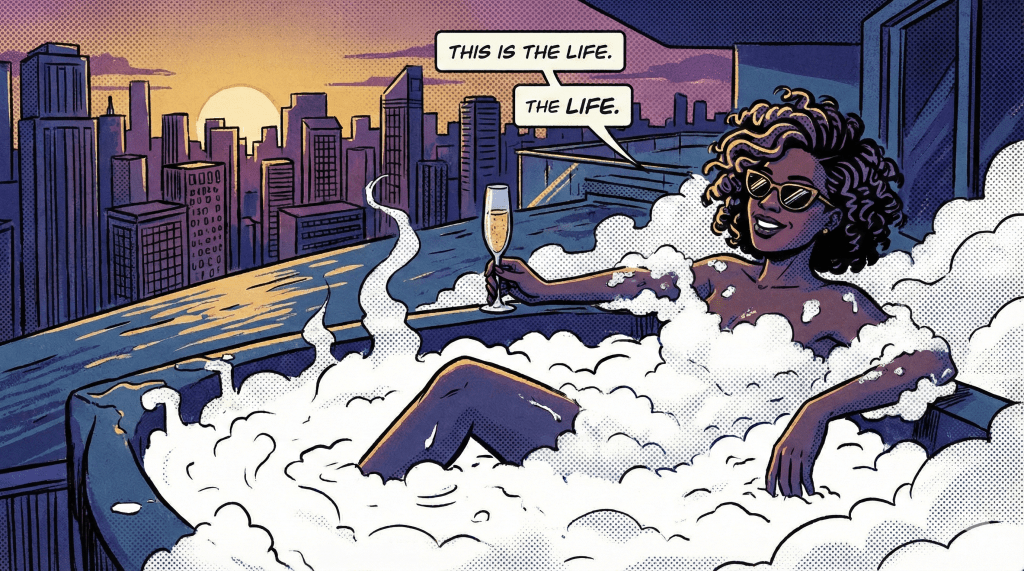
She realized she didn’t know what “self-care” was if it didn’t involve spending money. To her, care meant treating herself—shoes, food, stuff. Without the funds, she felt locked out of her own healing.
Meanwhile, my version of self-care costs exactly zero dollars (plus gas). Multiple times a week, after dropping the “J Squad” at school, I drive 11 minutes to the water. I sit by the San Francisco Bay, no devices, just listening to the wind and waves. It is a routine I built around my mental health, not my bank account.
When my wife couldn’t come up with a comparable activity, she spiraled. She felt that at her age, she should have figured this out by now. That shame turned into depression, and suddenly, even when good things happened, if they didn’t involve money, she couldn’t see the value.
Directions to a Place They’ve Never Been
We often talk about how this is a generational thing. Our mothers didn’t know how to do this for themselves, certainly not without the permission or funding of a husband or family structure. They cannot give us directions to a place they have never been.
We are a generation of explorers and innovators, often more by force than by choice. Every promise made to us has been broken on some level. It stands to reason that we are drawing the map while planning the route.
From “Self-Care” to Healing Justice This is where we have to pivot from the buzzword of “self-care” to the praxis of Healing Justice.
As scholars and practitioners like Cara Page and Erica Woodland point out, Healing Justice isn’t about escaping the world with a sheet mask; it’s about transforming the institutions that broke us in the first place. For Black women specifically, this distinction is vital. If our “healing” relies on capitalism (spending money we don’t have to feel better), we are just feeding the system that exhausts us.
My wife did the work. She looked into resources, and with a little guidance, she made a list of things to do by herself—activities that help her figure out who she is outside of the grind. She’s doing a great job, even if she doesn’t always see it.
Why We Map This is why the Labor Pains project uses Body Mapping.
We map because the body keeps the score (another 90s concept that turned out to be true). We map to find those “free” places of refuge, like my spot by the water, and to identify where the trauma of scarcity and survival is living in our muscles and marrow.
We do this in community—in our “Map & Meets”—because isolation is a lie the system tells us to keep us buying things to fill the void.
Join the Circle If you are tired of trying to buy your way to peace, or if you feel like you’re driving without a GPS, come sit with us. We are building the new rituals. We are drawing the map together.
- What: Online Map & Meets (Free for Black women)
- When: Throughout December and January
- Why: Because we are the leaders in the arena of our own healing.
Sign up, sign on, and let’s figure out the route together: laborpainsblog.com/lantern


Leave a comment